Time
Changes the number of movements, rounds, and sets. It does not merely shorten the same workout title.
Transparent by design
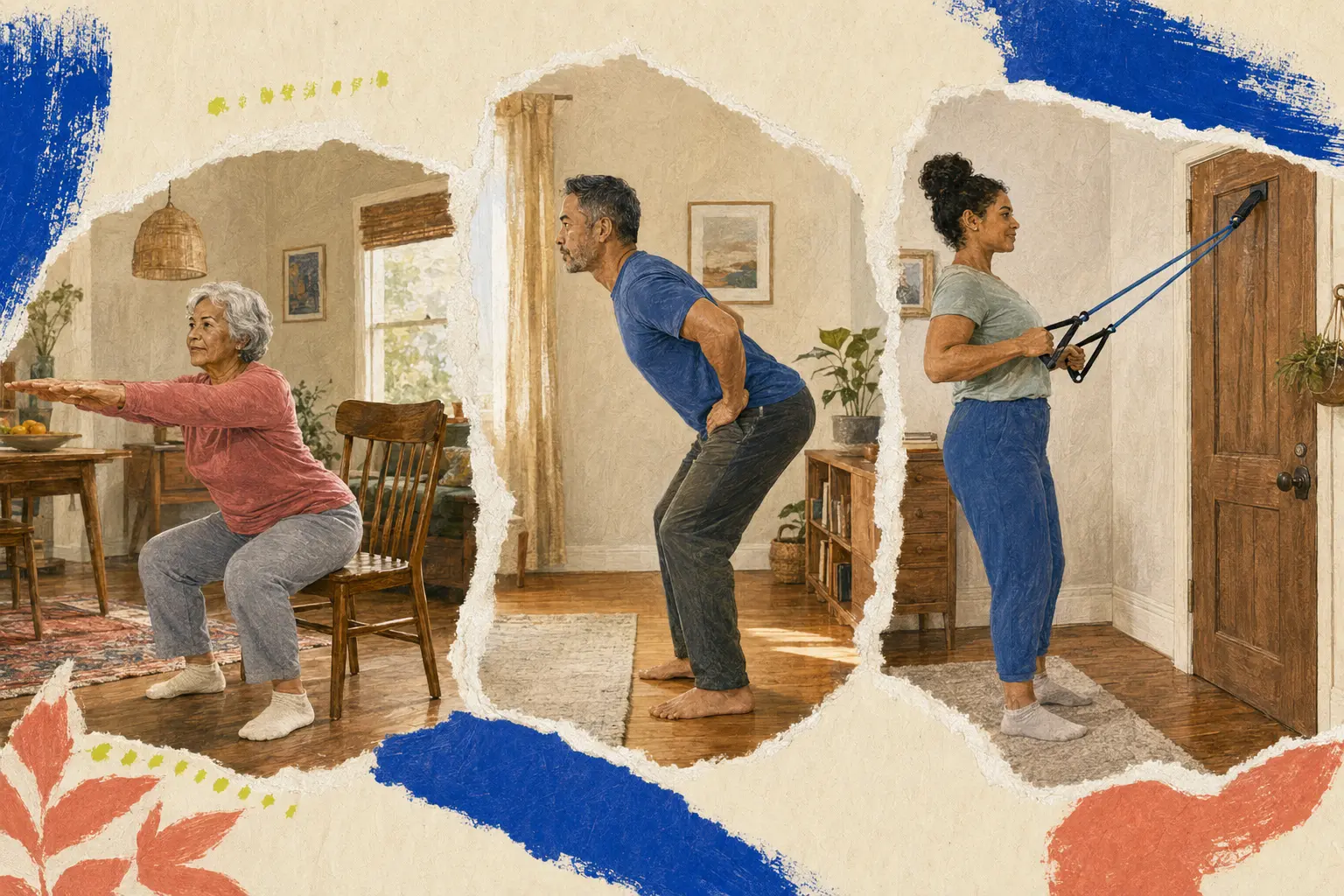
Workouts.how uses a rules-based general-fitness system. Your answers change the movement patterns, dose, impact, equipment requirements, alternatives, and progression. It does not claim to diagnose, coach through an injury, or know more about your body than you do.
Builder logic
Changes the number of movements, rounds, and sets. It does not merely shorten the same workout title.
Changes movement-pattern emphasis, repetition ranges, rest, and the recommended next session.
Adjusts total volume and effort target. Low energy does not trigger punishment or a warning streak.
Removes movements that require unavailable gear and favors honest body-weight or household alternatives.
Filters jumping, floor transitions, wrist-loaded work, overhead work, and unsupported balance based on the choices provided.
Changes movement complexity, total sets, repetitions, and the amount of progression suggested.
Programming principles
Effort without a wearable
Comfortable breathing. Full conversation.
You can talk, but singing would be difficult.
Shorter phrases. Effort is clear but still controlled.
RPE means rating of perceived exertion on a 0–10 scale. Individual perception varies. New or unusual symptoms override any target number.
Primary and authoritative sources
Last reviewed July 15, 2026. External guidance can change, so source links and review dates are part of the product.
U.S. Department of Health and Human Services
Physical Activity Guidelines for Americans, current guidelinesOverall public-health baseline, the value of any activity, and gradual progression.Centers for Disease Control and Prevention
Physical activity recommendations by populationAdult aerobic and strengthening recommendations, plus separate guidance for older adults, pregnancy, and chronic conditions or disabilities.Centers for Disease Control and Prevention
How to measure physical activity intensityThe talk test and plain-language intensity guidance.American College of Sports Medicine
Updated resistance training guidelines, 2026Individualization, adherence, goal-specific volume, the usefulness of bands and body weight, and the limited need for advanced methods for average healthy adults.World Health Organization
Guidelines on physical activity and sedentary behaviourPopulation-level recommendations and the principle of starting small and building gradually.National Heart, Lung, and Blood Institute
Physical activity and your heart: risksSafety language for chest pain, dizziness, and the need for professional guidance when symptoms occur during activity.The boundary matters
Workouts.how deliberately does not generate youth, prenatal, postpartum, post-surgical, cardiac-rehabilitation, injury-rehabilitation, or condition-specific programs.
Read the full safety scope